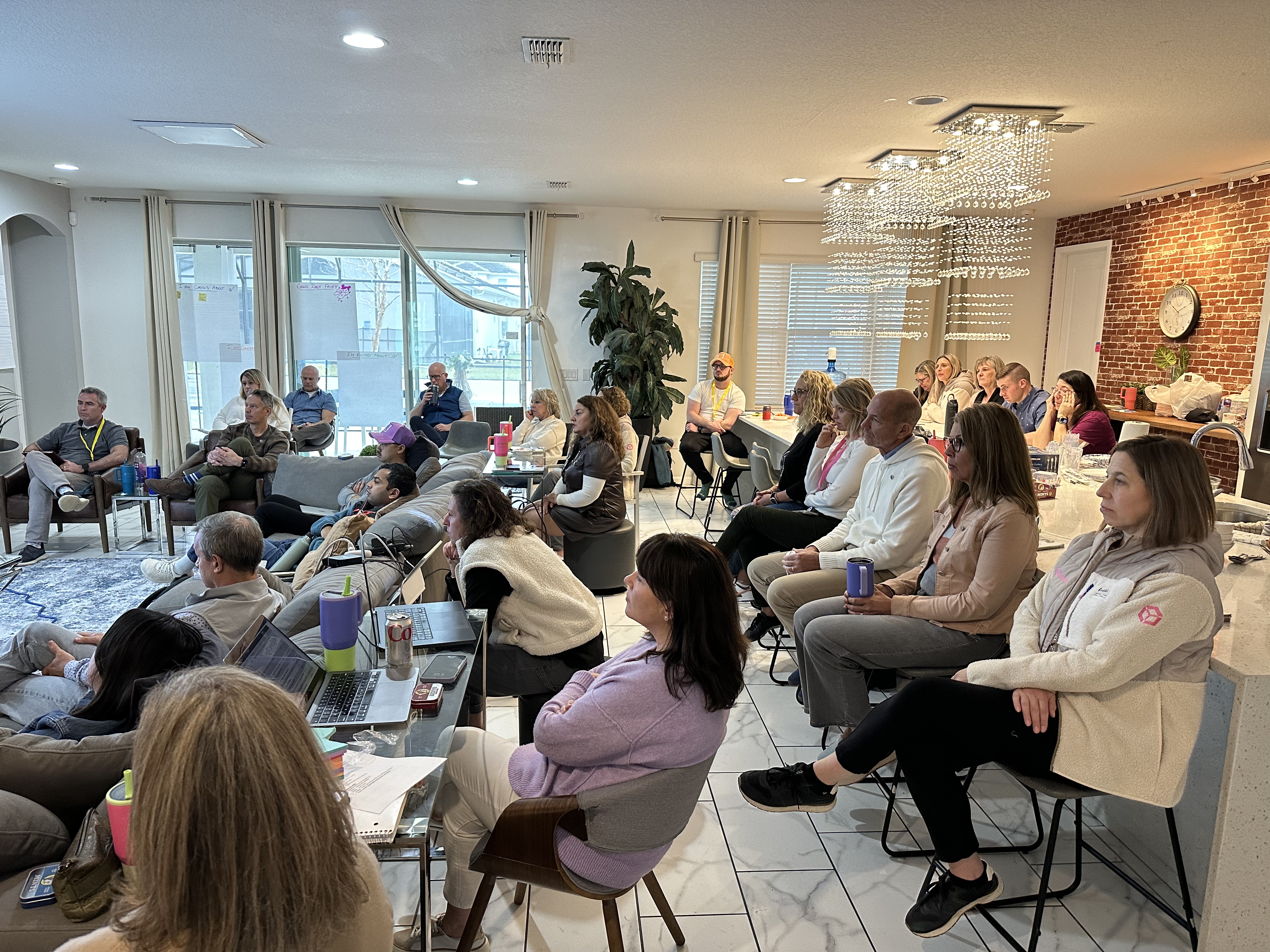
Once a year, I bring our entire AlignOrg team together in one room. My job is to make sure everything works so they can focus on what matters: learning from each other.
My responsibilities have taught me something important: the quality of an experience rarely hinges on one big moment. More often, it depends on whether dozens of small details work together the way they should.
Consider an airport shuttle scheduled an hour too late. A session room that’s too small and stuffy. Facilitation materials that don’t arrive until the morning of. None of these sound like a crisis. But at an annual gathering where consultants have flown in from across the country to share what they know, one overlooked detail can unravel everything around it. Shuttle delays mean the team arrives tired. The wrong room leads to a crowded, distracted session. A session without the right handouts and supplies means the insights don’t land. And when the group’s tired, distracted and the insights don’t land, the whole reason people made the trip is diminished.
That’s why detail orientation isn’t a nice-to-have in my profession—it’s the key to success. I’m not just coordinating logistics, I’m creating the conditions for our team to do their best thinking together. And the longer I’ve worked alongside our organizational design team, the more I’ve realized that’s exactly what they’re doing too, just at an organizational level.

When One Detail Changes Everything
There are hundreds of closely connected details that go into planning a multi-day event.
Let’s say I forget to order a gluten-free meal for someone on the team. The caterer scrambles to make something for them at the last minute. Lunch is delayed, and the post-lunch presenter misses their prep window. The next few sessions feel rushed and unorganized.
The same holds true for organizations. Make changes in one area, and no matter how big or small, you’ll see shifts throughout the system.
At AlignOrg, we see organizations as a six-sided cube. Each of the sides represents a different aspect of the organization, with strategy at the center.
- Work processes: what work gets done and how
- Structure and governance: who owns what and who decides
- Information and metrics: how you know you’re succeeding
- People and rewards: the skills you hire and the behaviors you reward
- Continuous improvement: how you adjust as things change
- Leadership and culture: the behaviors leaders model every day
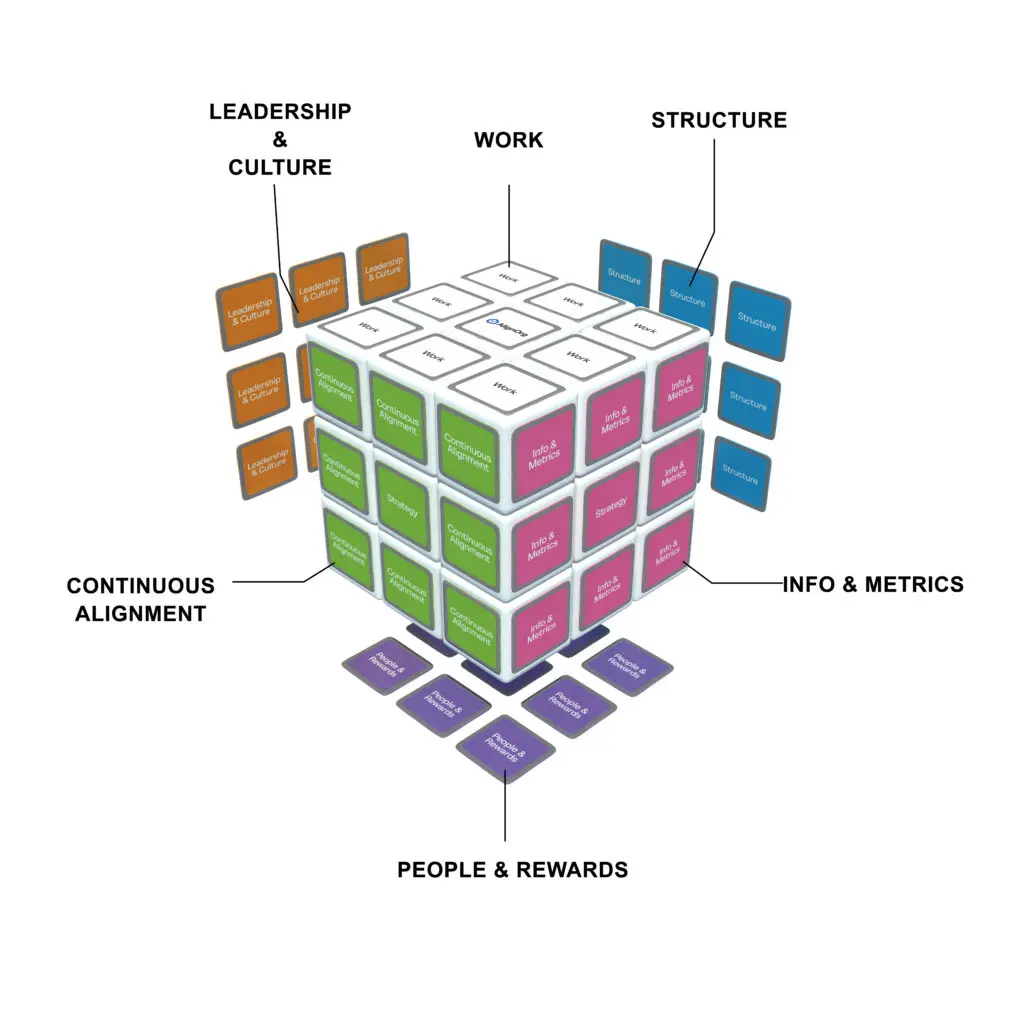
Like a cube, solving one side can scramble the others. That’s where detail-oriented leaders thrive—by ensuring that every aspect of the organization remains aligned to strategy as changes are made. Consider a company that shifts from a regional structure to a centralized one to improve consistency. On paper, the structural change looks clean. But without updating how work flows between teams, how success is measured, or how leaders are expected to make decisions in the new model, the change stalls. People default to the old ways—not out of resistance, but because every other signal in the system still points in the old direction.
Careful Communication
The details of communication are also critical. When I send out the event agenda, I don’t just share the schedule—I explain the why behind every session, who needs to be in the room, what people should come prepared to discuss, and what we’re hoping to walk away with. If I skip that context, people show up uncertain, disengaged or in the wrong headspace entirely. At AlignOrg, we accomplish this using a format called PME. It’s a concept our CEO and Principal Ken Thompson learned during his time in the U.S. Army and shared with the team.
Purpose—Why we are doing something?
Method—How we will do it?
End State—What does success look like?
These concepts are just as critical for communication that happens during organizational transformation. Leaders often invest enormous energy in the design itself—the structure, the roles, the new ways of working—and then communicate it in a single all-hands announcement and assume people will follow. They won’t. Employees don’t just need to know what is changing. They need to understand why it’s happening, what it means for their work specifically, and what to expect next.
Without a detailed, thoughtful communication plan woven into the transformation from the start, even the most well-designed change will stall. People fill silence with uncertainty. Uncertainty breeds resistance. And resistance is far more expensive to overcome than a thoughtful communication plan ever would have been.
Continuous Alignment Is a Practice, Not a Finish Line
After every gathering I host, I review the event using another military concept, the After-Action Review, or AAR. I review four central questions:
- What was supposed to happen?
- What actually happened?
- What were the causes of success or failure?
- How can we improve next time?
I try to think beyond the big moments to the small friction points. A session that ran long. A transition that felt rushed. A room setup that didn’t quite work. I document those details because I know the next event will only be as good as the adjustments I make today. Rather than overhauling the entire event every year, I focus on making small adjustments that make each annual gathering a bit more enjoyable and productive than the one before.
The same discipline applies to organizational design. Continuous improvement isn’t a once-a-year review. It’s an ongoing habit of noticing, adjusting, and staying close to what’s actually happening on the ground.
AOS methodology is clear on this point: alignment is not a destination you reach at the end of a redesign, it’s a practice. Markets shift. Strategies evolve. People move in and out of roles. Any one of those changes can quietly nudge the organization out of alignment—and leaders who aren’t paying close attention won’t notice until the misalignment has already done damage. The detail-oriented leader doesn’t wait for a full reorganization to correct course. They build in regular checkpoints, ask the same questions they asked at the start of the design, and treat small misalignments as early signals rather than minor nuisances to be ignored. That kind of ongoing attentiveness is what keeps an organization aligned and performing over time.
A Planner’s Checklist for Leaders
Before your next design decision, borrow a page from my run-of-show:
- What’s our goal? Define our PME (purpose, method and end state).
- What’s connected? Map every side of the organization this choice touches.
- Who needs to know? Bring the right people in early, not after the fact.
- When do we check in? Schedule your alignment reviews like you’d schedule a walkthrough.
- What were the results? Evaluate opportunities for improvement using the After-Action Review format.
The Bottom Line
Great events don’t happen by luck. Neither do great organizations.
Both come from leaders who respect the details: people who understand that every choice connects to every other choice, and who take ownership of making them fit.
Treat your organization like the most important event you’ll ever plan. Walk the room. Check the connections. Then check them again.
Your people will feel the difference, even if they never see the work behind it.
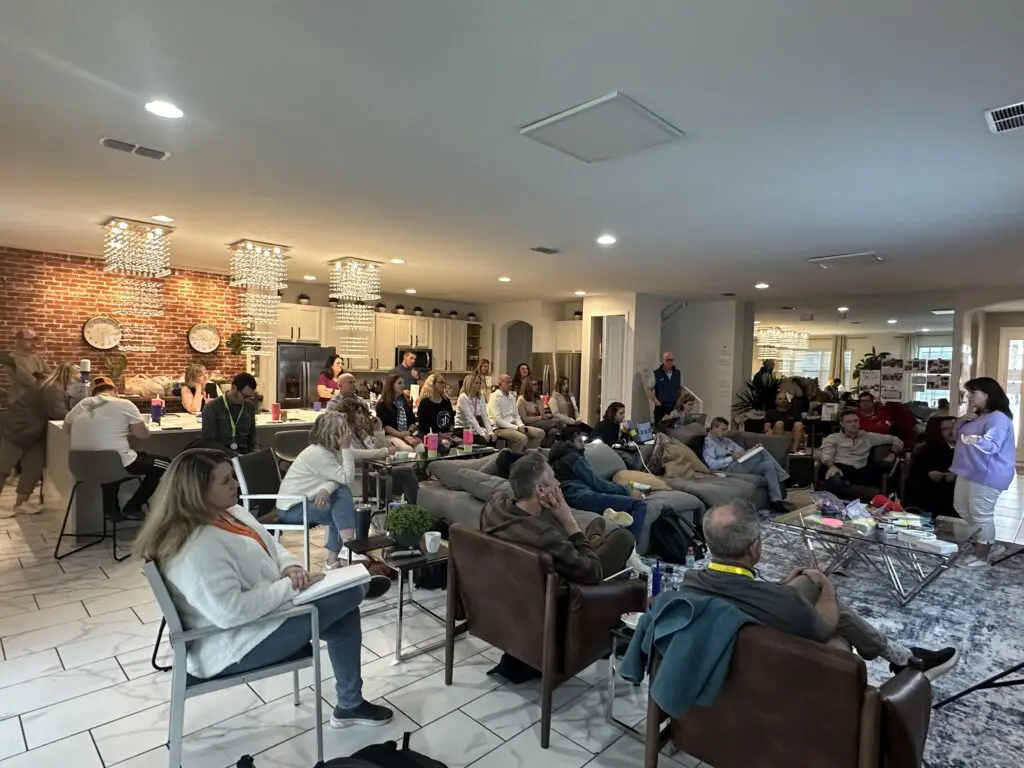
Photos in this post were taken during AlignOrg’s annual retreat in January 2025. Some individuals pictured are no longer with AlignOrg Solutions.