Your transformation launch couldn’t have gone better. Leaders were aligned, teams found early wins and the new operating model started to take hold. Then, things slowed. Enthusiasm turned into complacency and momentum began to fade.
It’s a common problem—in fact, research shows that only about 30 percent of organizational change efforts are successfully sustained over time. The reasons are largely internal: fatigue, drift, ambiguity and a slow slide back to old habits.
Let’s examine what causes successful transformations to stall, what warning signs to watch for and how to create a practical framework for building resilience.
Why Early Wins Don’t Guarantee Lasting Change
Momentum is difficult to maintain without sustained focus. Just ask anyone who’s ever kicked off a diet and workout plan. You’re eating right and going to the gym daily, then life happens. Work picks up and you skip a few runs. The pounds aren’t melting off as quickly as you hoped. You don’t make time to meal plan and end up grabbing fast food for dinner. Pretty soon, you’re right back where you started.
The same holds true for organizations. Even with aligned leaders and functioning workstreams, transformations can lose steam. The subtle causes that undermine our personal goals are largely the same ones that impact organizational change:
- Change fatigue: Employees tire of constant updates and shifting expectations.
- Drift: Teams move on to the next priority too soon and leaders lose focus.
- Reversion to old habits: People default to familiar routines when new behaviors aren’t consistently reinforced.
It’s easy to dismiss these as minor issues, but left unchecked they can erode a transformation’s sticking power.
The Price of Drift
To see this in action, let’s examine this hypothetical case. Marcus is a senior leader at a mid-sized logistics firm that is rolling out a new regional operating model. The first quarter went well. Cross-functional teams delivered visible wins and adoption looked strong.
Then the signals shifted. Two executives who had initially sponsored the change were distracted when they became involved in an acquisition. A few managers slipped back to legacy metrics because they were easier to report. Key contributors were reassigned to “urgent” projects, thinning the teams driving the change. There was no open resistance, just a growing sense of disengagement.
Marcus recognized the danger early. He convened a focused “transformation pulse” session with his core team. They reviewed momentum indicators, surfaced frustrations and reconnected the effort to its strategic stakes.
The outcome: a renewed 90-day plan that rebalanced workloads and pulled leadership back into visible engagement. The transformation didn’t just survive—it regained speed.
The lesson to be learned? Transformations usually don’t fail in dramatic fashion. More common is the slow fade of priorities and resurfacing of old habits. This is where it becomes critical to have a leader who is charged with continuous alignment—someone who can recognize the signs and right the ship before it strays too far off course.
Three Warning Signs of Transformation Failure
Most stalls give off signals before they become setbacks. Train yourself and your leadership team to spot them:
- Resource strain: Too many workstreams competing for too little bandwidth.
- Leadership drift: Fewer check-ins and visible messages of support.
- Passive resistance: Quiet skepticism from teams who aren’t yet seeing the value.
It’s not a question of if challenges will emerge, but when. That’s where the Alignment Leader® plays a critical role: keeping the organization aligned to strategy, spotting warning signs early and taking action before momentum slips.
How to Build a Resilient Transformation
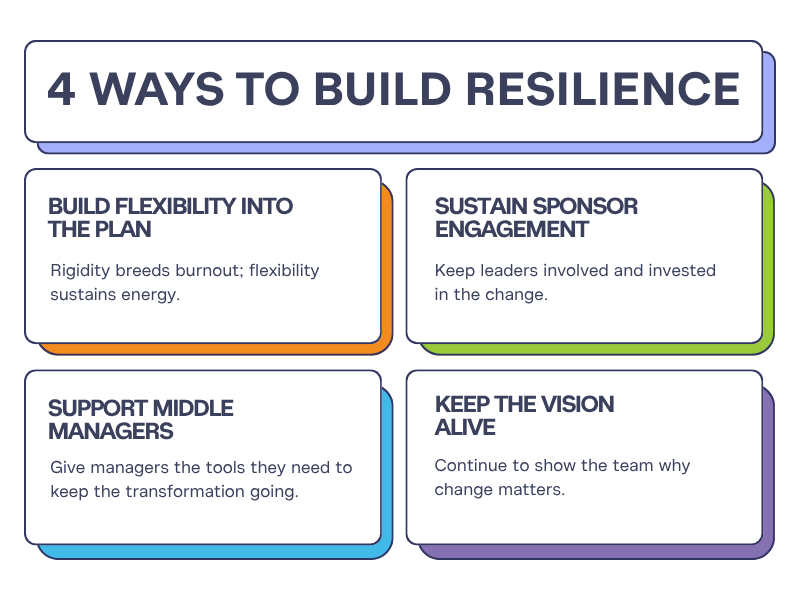
Sustainable transformations can’t rely on strong starts and good intentions. They must be engineered to absorb friction, handle setbacks and adapt in real time. Here are four ways to build that resilience.
1. Build Flexibility into the Plan
Give teams room to adjust scope, timelines or resources when conditions change. Rigidity breeds frustration and burnout; flexibility sustains energy. A plan that bends is far more durable than one that breaks under pressure.
2. Sustain Sponsor Engagement
Keep leaders visibly involved well past the early wins. A quiet leadership team sends an unmistakable message: this is no longer a priority. The regular, genuine presence of leaders keeps confidence high and reminds the organization the effort still matters.
3. Support Your Middle Managers
Middle managers are the linchpin between design and daily behavior. They translate strategy into what happens on the floor. Equip them with the tools, authority and talking points to keep progress alive. When they feel supported, adoption sticks. When they feel stranded, it unravels.
4. Keep the Vision Alive
People lose steam when they can’t connect daily work to the bigger picture. Reconnect the two by showing why the change still matters and how each contribution moves the organization forward. Purpose is what carries teams through the long middle of any transformation.
Remember, transformation isn’t a single event—it’s a discipline of alignment, execution and adaptation. The leaders who treat it that way don’t just manage change. They build lasting capacity for it.
To learn more about implementing the changes needed to move strategy from design to results, download our Activating Transformation Executive Guide.