The year is 1912. Mrs. Yeager receives a telegram from her husband, a chronic gambler. She opens it, fearing the worst.
“Broke. Even lost on Dollie.”
Mrs. Yeager springs into action. Determined to save the family from financial ruin, she pawns $35,000 in jewelry. Even though she only receives $6,000 for the gems, it’s enough to keep food on the table and pay the bills.
Eventually, Mr. Yeager returns from his trip to the horse track. He’s horrified when his wife tells him what she’s done. He didn’t lose the family fortune, he explains. The telegram should have read, “Broke even. Lost on Dollie.”
What can we learn from the true story of Mrs. Yeager (who divorced her husband but never reclaimed her jewels)? Technology can be wonderful—but it’s no substitute for the clarity and connection of face-to-face communication.
The Limits of Technology
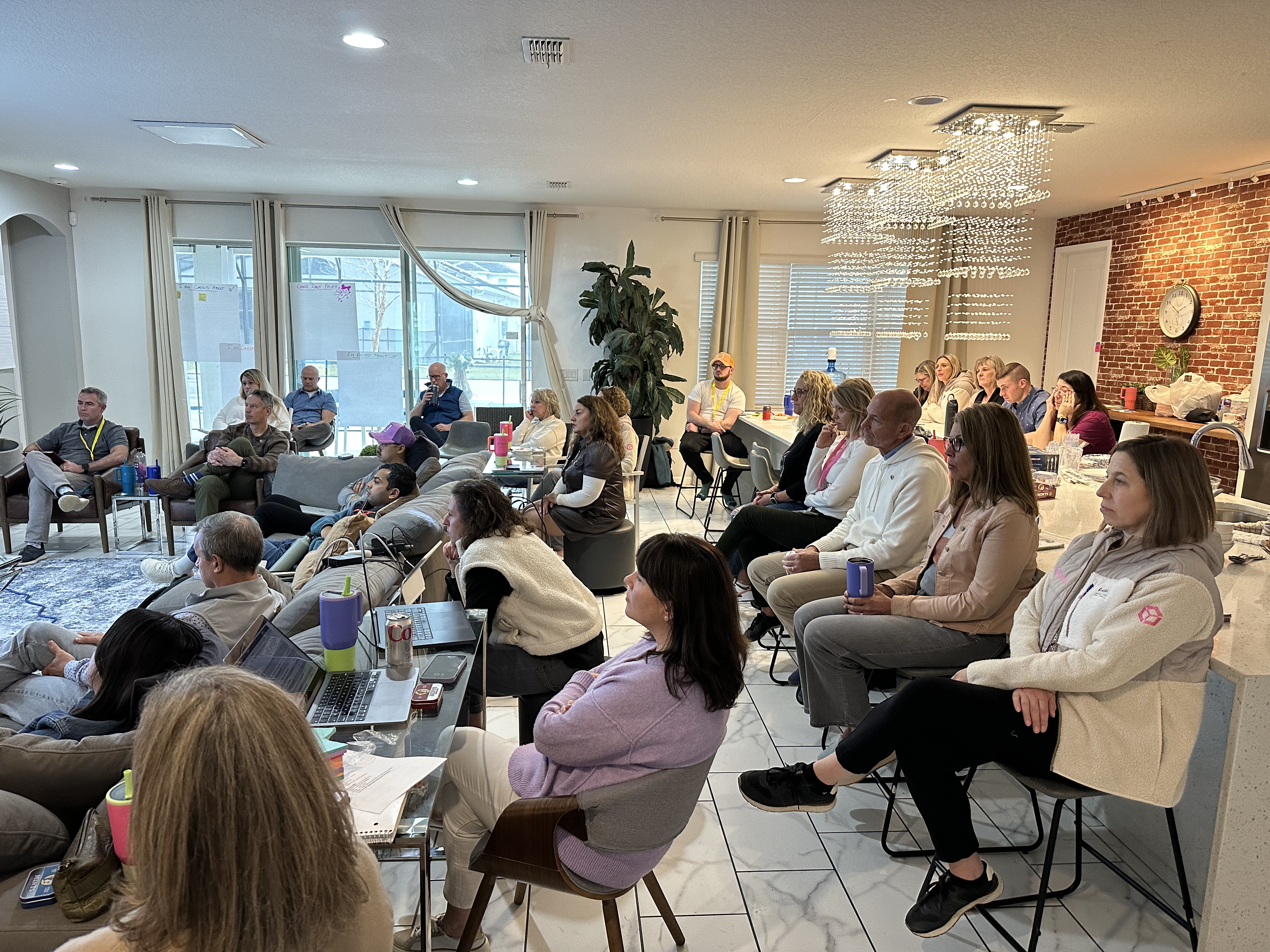
I saw this principle firsthand during our recent AlignOrg leadership meeting. It’s one of a few times each year when our team, spread throughout the country, meets in person to discuss priorities and shape the future of our organization.
The last time we’d met, I’d asked the team to integrate AI technology in two new ways. The first aimed to streamline our internal processes, and the second would be a client-facing AI program we’d use during facilitation.
We were aligned on the strategic importance of this project. I work with the best and brightest in the industry and had full confidence that we’d hit these goals on target.
Not so fast.
Although we’d been dedicated to executing this project, the way of working was flawed. Zoom meetings, emails and phone calls hadn’t exposed many of the issues that quickly came to light during our in-person meeting.
Within a few minutes of gathering in the same room, we began to ask questions we’d never raised before.
“What are the tradeoffs of this initiative?”
“Has anyone considered the risk to X, Y and Z?”
“I’m concerned about how this will impact my client’s experience.”
Sitting around a table allowed us to have a frank conversation and communicate on a deeper level than we’d been able to reach behind a computer screen. It took a face-to-face meeting to bring to light concerns and misalignments that would have never otherwise surfaced.
The Science of Being in the Room
It’s easy to chalk it up to the “fun factor.” Maybe, meeting in person brings out the best in us just because we enjoy working together. But researchers have evidence that face-to-face communication has scientific benefits that can’t be replicated through screens or phones.
Building Trust
In her book The Village Effect, developmental psychologist Susan Pinker credits “unconscious mimicry” for building trust during in-person communication. This mimicry happens when we reflect back a person’s speed of talking, physical cues and filler words like “um,” and “ah” during a conversation.
“When people are interacting face-to-face, unconscious mimicry elicits emotions that grease the wheels of social interaction,” Pinker writes. “…the more people mirror each other in conversation, the more they say they trust each other.”
For proof, look no further than your local diner. According to the author, waiters are tipped 140 percent more if they repeat your order word-for-word. “This type of unconscious imitation hints at how much our thinking ‘hinges’ on face-to-face contact,” she states.
The Value of Body Language
Research by psychologist Susan Goldin-Meyer argues that gestures are just as important as language when it comes to getting your message across. They communicate information about our thoughts and intentions, often without us even realizing it.
“If I’m a teacher and my kid is on Zoom, I’m not seeing the ideas that the child might have implicitly,” she stated in an interview. “And if I express something as a teacher, my student isn’t seeing that information. I think it is really a loss.”
The Mental Toll of Digital Communication
Finally, there’s Zoom fatigue, or the idea that our brain gets overwhelmed by trying to process information while we’re distracted by slight delays in communication, lack of eye contact and watching our own face on the screen.
In short, science has proven what we know intuitively: we’re able to troubleshoot more effectively, find better solutions to challenging work and communicate with fewer misunderstandings when we’re all in the same room. It’s why 95 percent of our facilitation work with clients takes place in-person, even though we have the technology for virtual facilitation when needed.
A Smarter Approach to In-Person Collaboration
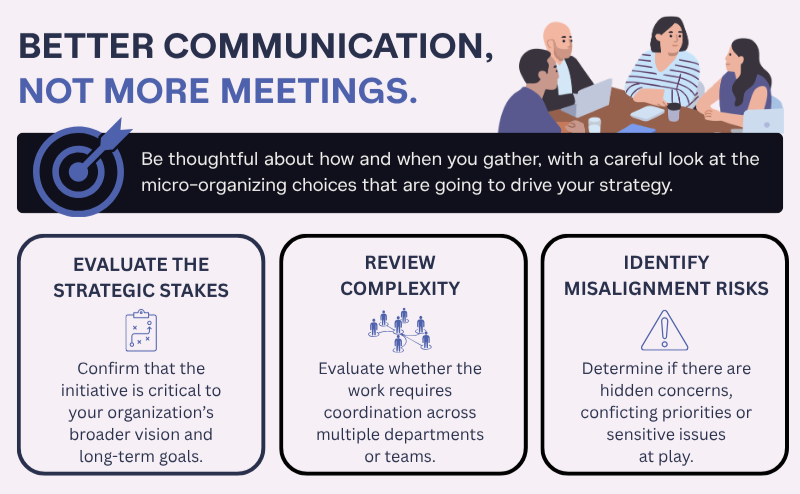
The answer to more effective communication isn’t to fill your calendar with in-person meetings. For most organizations, it’s just not efficient, realistic or necessary. The goal is to be thoughtful about how and when you gather, with a careful look at the micro-organizing choices that are going to drive your strategy.
- Evaluate the strategic stakes: Confirm that the initiative is critical to your organization’s broader vision and long-term goals. A potentially risky new product offering? Absolutely yes. A revamped employee PTO plan? Probably not, unless it’s critical to your broader strategy.
- Review cross-functional complexity: Determine if this work requires coordination across multiple teams or departments. The more complex the initiative, the more likely you’ll benefit from a face-to-face gathering.
- Identify misalignment risks: Are there hidden concerns, conflicting priorities or sensitive issues at play? If so, all the more reason to meet in person.
Once you’ve considered these questions, it’s time to take a common-sense look at how you’re setting up your in-person meetings: make sure there’s a designated leader prepared to guide the room, you’ve clearly defined your meeting objectives and you’ve given thought to length and frequency.
Keep in mind that every decision comes at a cost—in lost productivity from people being pulled away from their everyday work and in the financial expense of getting employees together. What are you willing to give up to bring these meetings to life?
Designing for Connection
We live in a world where we can accomplish nearly everything online, from grocery shopping to dating and doctor’s appointments. It’s tempting to route all of life’s priorities through a little glowing screen, but it’s not always the most effective way to communicate, especially when the stakes are high.
What does this mean for us at AlignOrg? After our last meeting, we’re giving careful thought to how we improve the way we communicate on critical projects. It doesn’t mean that we’re flying our team in from across the country every week, or even every month, but it does mean that we’re reinvesting in our in-person meetings, examining how to get the most out of every minute and looking forward to a future where we work better, together.