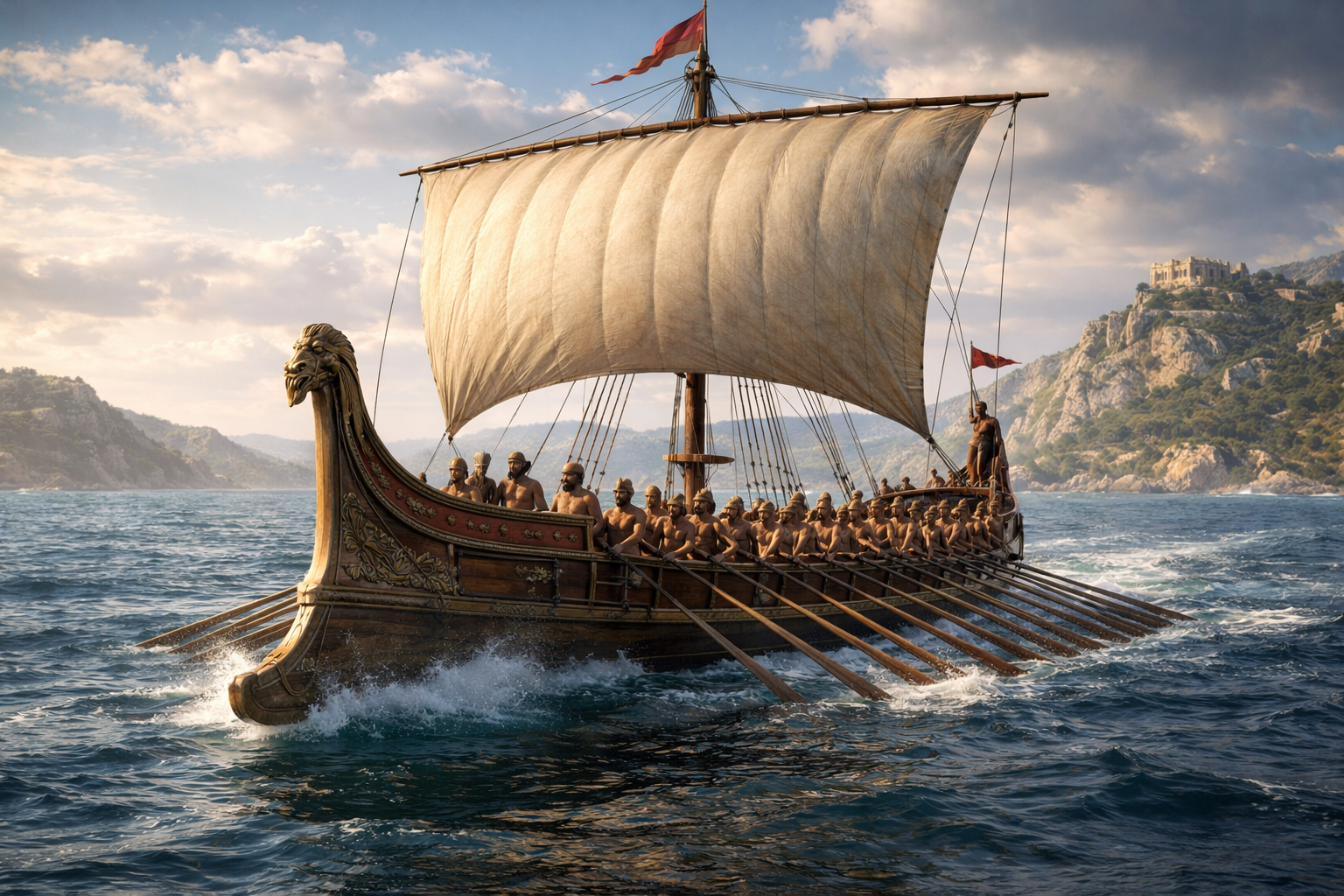
In The Odyssey, Odysseus is not slow. He is decisive, adaptive and relentless about reaching his destination. What distinguishes his leadership is not patience for its own sake, but discipline under uncertainty. He understands that moving quickly without cohesion puts the entire journey at risk.
Organizational transformations demand the same kind of leadership. The challenge is rarely speed. Most organizations move quickly once strategic direction is clear. The challenge is whether leaders are sufficiently aligned and prepared to lead while the work unfolds.
Strategy and organizational design may be completed at the front end, but transformation succeeds or fails in execution. That is where leadership alignment is tested.
Execution Creates New Leadership Demands
Once transformation begins, leaders are no longer discussing concepts. They are responding to real questions, real anxiety and real consequences. Decisions that felt theoretical during design become personal during execution.
This is the moment when leadership alignment either holds or fractures.
Leaders are asked to explain changes that are still being refined. They are asked to respond to speculation. They are asked to reassure teams while details remain in motion. Without shared understanding and discipline, leaders begin improvising.
What follows is rarely intentional misalignment. It is well-meaning leaders filling gaps differently.
People Will Fill Gaps If Leaders Do Not
When information is incomplete, people do not pause and wait. They interpret.
This is not rumor or resistance. It is human cognition. Faced with uncertainty tied to role, status, or future security, people look for patterns. They read tone, notice shifts in visibility and connect dots.
During organizational change, those dots are everywhere. New meetings appear. Language changes. Certain leaders become more central. Others fade. Even small signals carry meaning.
If leadership alignment is weak, people construct their own narrative about what those signals mean. That narrative often spreads faster than any formal communication.
At that point, leaders are no longer leading the story. They are reacting to it.
Organizational Design Is Lived, Not Announced
From a senior leadership perspective, organizational design enables strategy. From an employee perspective, it reshapes daily reality.
People are not reacting to operating models. They are reacting to what those models imply for their influence, workload, autonomy and sense of belonging. A statement like “roles may evolve” lands differently depending on context and trust.
When leaders cascade information they have not fully absorbed themselves, uncertainty multiplies. Teams hear variation instead of coherence. Execution slows as people try to interpret what matters most.
This is not about resistance. It is about people protecting themselves in the absence of clarity.
Why Leaders are Often Surprised by the Reactions
Many leaders are surprised by how strongly people react during execution. Some disengage quietly. Others push back openly. Some comply while withdrawing effort.
These reactions are rarely about misunderstanding the strategy. They are about perceived threat.
As leadership researcher David Rock has shown, workplace change activates deeply human concerns around status, certainty, autonomy, relatedness and fairness. When these feel threatened, people respond emotionally before they respond rationally.
Leaders who do not anticipate this often assume communication failed. In reality, leadership alignment failed to account for how change is experienced in motion.
When Leaders Are Asked Not to Share Details
During execution, leaders are sometimes asked not to share certain details. This is often misunderstood as secrecy. The true intent is to wait until they have all of the information.
Incomplete information creates more confusion than silence. Half-formed answers invite speculation. Partial context becomes distorted as it travels. Leaders who share before understanding the full picture unintentionally amplify anxiety.
Strong leadership means taking the time to understand the change before cascading it. It means asking questions upward, clarifying assumptions and aligning on language. Only then can leaders communicate responsibly.
Restraint in these moments is not about withholding. It is about ensuring what is shared is accurate, consistent and useful.
Managers Carry the Weight of Transformation
Managers are not just messengers. They are stabilizers.
They translate strategy into daily decisions. They absorb uncertainty and either steady the organization or amplify anxiety. When managers feel aligned and informed, teams stay focused even when clarity is incomplete.
When managers are left to interpret on their own, speculation increases. Employees escalate questions upward. Momentum slows.
If leaders want execution to hold, they must invest in manager alignment continuously, not just at kickoff.
Alignment is a Leadership Practice During Execution
Many organizations treat alignment as something achieved during design. Once the model is approved, leaders assume alignment will carry through.
Execution quickly proves otherwise.
New pressures emerge. New questions surface. Interpretations multiply. Alignment must be actively maintained.
During execution, aligned leaders:
- Reinforce shared direction without inventing certainty
- Are clear about what is known and what is still being developed
- Hold boundaries around incomplete information
- Redirect teams toward execution and controllables
- Model calm and responsibility under pressure
- Keep managers informed throughout the process
This is not messaging. It is leadership capacity in action.

The Real Risk Leaders Underestimate
The greatest risk in transformation is not moving quickly. It is assuming leadership alignment will hold without reinforcement.
When leaders underestimate the demands of execution, organizations pay later through slowed delivery, reduced engagement and erosion of trust. By the time these symptoms appear, leaders often label them as resistance or fatigue.
More often, they are signs that leadership alignment was treated as optional once execution began.
Holding the Journey Together
Odysseus succeeds not because he knows every step of the journey, but because his crew trusts his leadership when the path shifts.
Organizational transformation requires the same discipline.
Leadership is not about slowing down. It is about ensuring leaders are aligned enough to move fast without losing cohesion.
Strategy becomes reality when leaders have the capacity to lead through uncertainty during execution, not just design around it.