
During a recent client call, a leader was lamenting the current climate within the organization. She said it felt disjointed, like walking through mud. Her exact words were, “We need harmony.” This got me thinking: what makes harmony so critical to an organization’s success, and how can a lack of it leave the whole company sounding painfully off-key?
The Discomfort of Dissonance
My husband and I are avid concertgoers. As children raised in the 80’s, our love of music spreads across genres. Recently we learned that one of our favorite pop-rock groups was coming out of retirement. The day tickets went on sale, I logged on and quickly picked front row seats. A touch of keys, a credit card entered, and the tickets were ours! With a couple more clicks, a hotel room was secured and airlines tickets booked. We were ready for the musical experience of a lifetime.
As the date of the concert approached, we listened to old records on the hi-fi, reacquainting ourselves with their work: timely lyrics that rang with social justice and calls for peace and equity. The group’s unique harmonic voice was crisp and melodic. We couldn’t wait. Our travel was seamless, the hotel was beautiful and the venue was newly renovated. In our seats, we waited with bated breath for the concert to start.
The iconic bars of one of their world-famous songs opened the show. And then they sang. Their distinct voices were off and the harmony of their youth wasn’t there. They were half a beat behind and slightly off key—just enough dissonance to make the audience squirm.
My brain tried to resolve the missed harmonics and shaky timing, but as the night wore on, I became more uncomfortable and critical of what I was experiencing. I was disappointed. What I had expected was vastly different from what I had actually experienced. The musical dissonance made the entire concert fall flat.
Dissonance Creates Inner and Outer Conflict
Dissonance refers to the lack of harmony, agreement or consistency. This term spans across multiple fields including psychology, music, culture and emotions. The basic tenants of dissonance hold to the idea that this lack of harmony creates conflict, whether that is an unpleasant combination of sounds in music or subconscious messaging that clashes with your behavior, attitude and beliefs.
Within the workplace, dissonance can look like disengagement, lack of interest and focus or confusion. If there is a gap between how an organization promotes its ways of working and its actual daily routines, then employees end up suppressing their true emotions to work within the bounds of expectation.
Forging the Path
If we want harmony within the workplace, then we need to conduct it deliberately. This means fostering open communication, empowering employees to contribute, holding space for constructive feedback and acknowledging efforts that build trust and a sense of belonging.
This can look like:
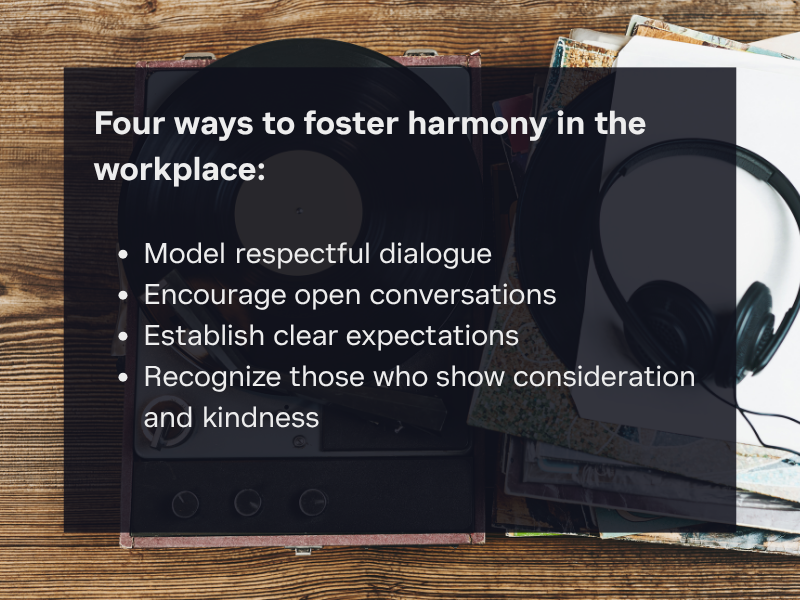
- Modeling respectful dialogue
- Encouraging open conversations among employees, across all levels of the organization
- Establishing clear expectations about how concerns should be addressed with respect to all voices involved
- Acknowledging good gestures and recognizing those who show consideration and kindness for others
Whether within the organization or with public accolades, acknowledging other’s efforts is essential to building a supportive culture. Cultivating a culture of feedback is another way to minimize dissonance. How you give feedback and how you accept it will determine how you grow as both an individual and an organization.
A Leader’s Call to Action
If you are experiencing dissonance within your organization, see this as an opportunity to root out the cause. Get curious about what is causing the discord. Ask critical questions of yourself as a leader. Diagnose the cause. Enact a plan to address and resolve the conflict and find harmony again. If unresolved, misalignment can cause tension, leading to disengagement, burnout and loss of good talent.
I love the concept of harmony within the work environment. It signifies that not every person is on the same note, but operating from a complementary space, giving depth and warmth to an organization. It demonstrates that an organization is intentionally working from the same page while allowing employees to act authentically, using their voice to add to that of the organization’s.
While harmony is often discussed as a cultural outcome, organizational harmony is ultimately created through alignment. At AlignOrg, we use the Cube Model to help leaders understand that culture and people practices do not exist in isolation. The behaviors we seek to encourage are shaped by how work is designed, how decisions are made, how success is measured, and how people are rewarded. When these organizational elements reinforce one another, teams can move from dissonance to harmony – not through better intentions alone, but through a system intentionally designed to support the desired outcomes.
Unlike my opening story, don’t let dissonance within the organization leave a bad impression with those you encounter. Be deliberate in your attempts to create a harmonious work environment. Find a state of balance, a blend between choices and people that are unique to your brand and the people who work in it. The payoff is tangible: better morale, individual strengths enabled and improved collaboration towards the common goal. Harmony.