Due to the complexity in today’s marketplace and the challenge of increasing both efficiency and growth simultaneously, many businesses are turning to matrix organizations for solutions.
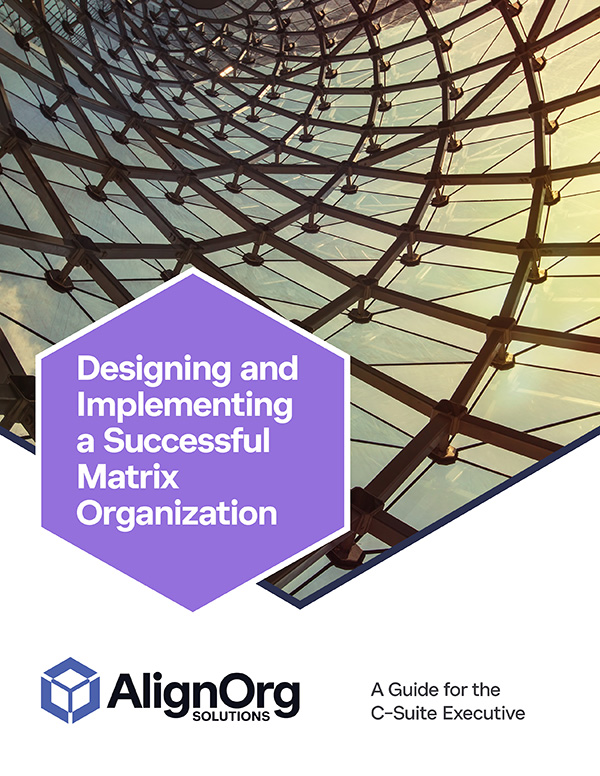
What You’ll Learn
- What a matrix organization actually is and whether you need one. A matrix is when an employee formally reports to more than one person, and the guide gives you a clear framework to decide if the benefits (coordination, resource sharing, speed) outweigh the real costs before you commit.
- How to diagnose what’s actually wrong with your current matrix.
Matrix problems fall into two categories: strategic design issues and operational issues, and the guide shows you how to tell the difference so you fix the right problem instead of wasting time and money on the wrong one. - The leadership skills required to make a matrix work long-term.
A matrix cannot be managed like a traditional structure. The guide outlines 8 specific skills leaders must develop, from decision-making in ambiguity to conflict management, to keep the matrix running effectively.
Frequently Asked Questions
No. The guide is explicit that a matrix is far more than reporting lines. It requires intentional design of decision rights, processes, performance management, resource allocation, and leadership behaviors. Organizations that treat it as just an org chart change almost always struggle.
The guide separates matrix failures into two categories. Strategic design issues mean the matrix was never properly tied to the organization’s strategy. Operational issues mean the structure is right but the decision rights, roles, and processes were never clearly defined. Knowing which category you’re in determines how to fix it.
Leaders give up too soon. The guide points out that most executives abandon a matrix before they’ve done the work to mitigate its risks, which creates a costly cycle of constant restructuring. A matrix that isn’t working is usually a design problem, not a reason to scrap the structure entirely.