We’ve been taught that productivity looks like focus. Head down. Calendar full. Deliverables moving. Be responsive. Be efficient. Be “on.”
But what if one of the most effective ways to do better work… is to step away from it?
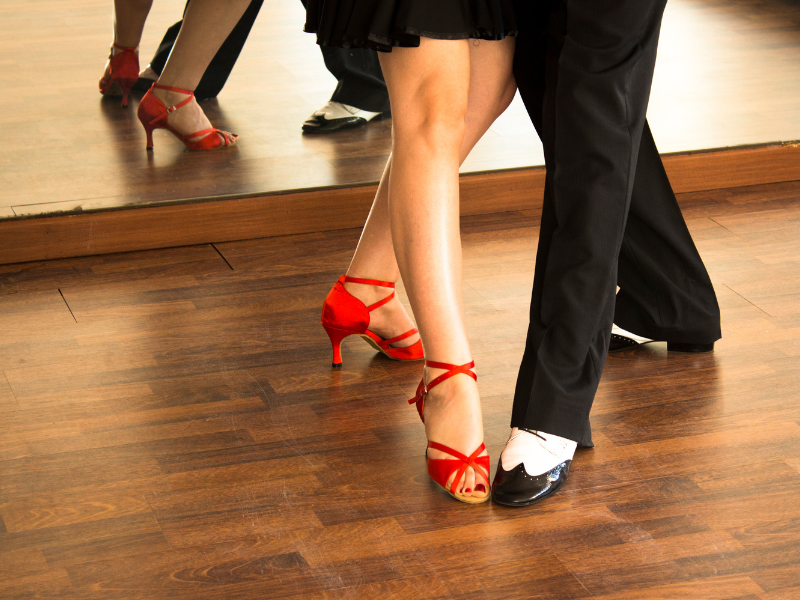
Lately, I’ve been testing this in a way I didn’t expect. I started taking salsa classes at Salsa Kings.
Not as a hobby. As a performance strategy.
The Myth of Constant Output
In many professional environments, there’s an unspoken belief:
The more time you spend “on,” the more valuable you are.
It shows up in back-to-back meetings, instant Slack/Teams responses and the subtle pressure to always be available. Productivity becomes synonymous with visibility—if you’re not actively producing, it can feel like you’re falling behind.
But cognitively, that’s just not how humans work.
Our brains aren’t built for sustained, linear output. They operate in cycles—focus, fatigue, recovery, insight. When we skip the recovery part, we don’t just get tired… we get less effective.
You’ve probably felt this before:
- You reread the same sentence three times and still don’t process it
- Decisions take longer and feel heavier
- Small problems feel disproportionately frustrating
- Creative thinking becomes… flat
Over time, this compounds.
- Decision quality drops
- Creativity narrows
- Patience decreases
- Work starts to feel heavier than it should
And yet, instead of stepping away, most of us double down—more coffee, more hours, more force.
The irony is that the harder we push in that state, the less effective we become.
Why Salsa? (Or Anything That Gets You Out of Your Head)
Salsa is fast, social, rhythmic—and completely incompatible with overthinking.
You’re learning footwork, following timing, reading your partner and staying on beat. You’re paying attention to music, movement and connection all at once.
There’s no room to mentally rehearse tomorrow’s meeting.
No space to check your phone.
No bandwidth to worry about your inbox.
You have to be present.
And that’s the point.
Most of our work lives are spent in our heads—analyzing, planning, anticipating, reacting. We rarely get a true break from that cognitive loop.
Activities like salsa interrupt it.
Whether it’s dancing, yoga, walking, painting, or cooking—anything that engages your body and pulls you into the moment—shifts your brain out of task mode and into what I’d call integration mode.
This is where:
- Ideas connect in ways they didn’t before
- Problems resolve themselves without forcing them
- Your nervous system resets
- You come back clearer, not just calmer
It’s not about escaping work. It’s about creating the conditions to think better when you return.
The Science Behind the “Breakthrough After a Break”
There’s a reason your best ideas tend to show up when you’re not trying so hard—on a walk, in the shower, or mid-conversation.
It’s tied to what neuroscientists call the default mode network (DMN)—a system in the brain that becomes active when you’re not focused on a specific external task.
The DMN plays a key role in:
- Creativity and idea generation
- Memory consolidation
- Making connections across seemingly unrelated concepts
When you’re constantly in “task mode,” this network is suppressed. You’re efficient, but narrow. Focused, but less flexible.
When you step away—especially into something embodied and engaging—you allow that system to turn back on.
That’s when insights happen.
It’s not random. It’s biological.
Embodied Activities = Faster Mental Reset
Not all breaks are created equal.
Scrolling your phone might feel like a break, but it’s still input. You’re consuming, reacting and staying mentally “on”—just in a different context.
True recovery requires a shift.
Activities that involve your body—like dancing—create that shift more effectively because they engage multiple systems at once:
- Coordination and rhythm (motor engagement)
- Sensory awareness (music, movement, environment)
- Social interaction (connection, responsiveness)
Physiologically, they also:
- Increase dopamine (linked to motivation and reward)
- Reduce cortisol (stress hormone)
- Improve overall mood and energy
It’s a full system reset—not just a pause between tasks.
And the faster you can reset, the faster you can return to high-quality thinking.
What This Means for How We Work
If we want better thinking, better strategy and better outcomes, we need to rethink how we structure our time.
Right now, most people optimize for output.
More hours. More meetings. More responsiveness.
But the real leverage point isn’t how long you can stay focused—it’s how well you can recover.
Instead of asking:
“How do I stay focused longer?”
Try asking:
“How do I recover more intentionally?”
Because the people who perform best over time aren’t the ones who grind nonstop.
They’re the ones who understand their own energy, protect their mental clarity and know when stepping away is actually the most productive move they can make.
A Simple Reframe
That hour you spend dancing, walking, or doing something unrelated to work?
It’s not lost productivity.
It’s:
- Pre-processing for your next idea
- Recovery for your cognitive system
- Fuel for better decisions
- Space for creativity to emerge
We tend to only value what we can measure—outputs, deliverables, hours worked.
But some of the most valuable parts of thinking happen between those things.
Try This This Week
Pick one non-work activity that:
- Gets you out of your head
- Engages your body
- Feels genuinely enjoyable (not optimized, not productive—just enjoyable)
Do it without multitasking. No podcasts. No emails. No “stacking habits.”
Just be in it.
Then pay attention:
- How do you feel afterward?
- How does your thinking shift when you return to work?
- What comes easier that felt stuck before?
Treat it like an experiment.
Final Thought
You don’t need to earn your breaks.
Your brain needs them to function at its best.
For me, lately, that’s been learning salsa — a little messy, sometimes humbling and always fun.
And every time I come back, I feel sharper. Clearer. More creative.